How Often Should You Bathe Your Dog?
Keeping your dog clean should feel simple, not stressful. Many San Diego pet parents ask how often they should bathe their dog, and the answer depends on a few practical things like coat type, outdoor activities, and the warm coastal climate here.
At Fon Jon Pet Care, our groomers see dogs of every size and lifestyle each week, so we have a good sense of what keeps a dog’s skin healthy and their coat fresh without overdoing it.
A good bathing routine helps your dog feel comfortable, look great, and stay ready for all your adventures around San Diego.
Key Summary:
Most dogs should be bathed every four to six weeks, but the right schedule depends on their coat type, lifestyle, and skin health. Short-haired dogs may only need a bath every couple of months, while long-haired or active breeds might need one every few weeks. The goal is to keep your dog clean without drying out their skin.

Boarding Clients!*Discount does not apply during holiday/peak rate periods.

Why Bathing Frequency Matters
Bathing is more than making your dog smell clean. It has a direct effect on their skin, coat, and comfort. The right schedule removes dirt and buildup before it causes problems, and it also gives you a quick chance to check for anything unusual.
When you bathe your dog on a healthy schedule, it helps:
-
Remove dirt, salt, dust, and loose fur
-
Reduce odor from oils and outdoor activities
-
Rinse away allergens and sand from beach days
-
Support healthy skin by preventing buildup
-
Make brushing easier by softening the coat
But bathing too often can strip natural oils and lead to dryness or irritation. A thoughtful routine keeps your dog in that sweet spot where their skin can breathe and their coat stays soft.

Factors That Determine Frequency
Every dog is different. A beach-loving shepherd will need a different schedule than a small indoor pup who prefers the couch. Here are the major things that shape the best bathing routine.
-
Coat Type
Your dog’s coat plays a big role in how often they need a bath, since each coat holds dirt and oils differently.
- Short-coated dogs: Boxers, bulldogs, and other short-haired breeds usually need a bath every four to six weeks. Their coat stays fairly clean, but natural oils still build up over time.
- Long-coated dogs: Goldens, doodles, and other long-haired breeds pick up dirt, grass, and sand quickly. A bath every three to four weeks works well, along with regular brushing to prevent tangles.
- Double-coated dogs: Huskies, German shepherds, and corgis have thick undercoats and do best with baths every six to eight weeks. Too many baths can disrupt how their coat manages temperature, so spacing them out helps keep the skin healthy.
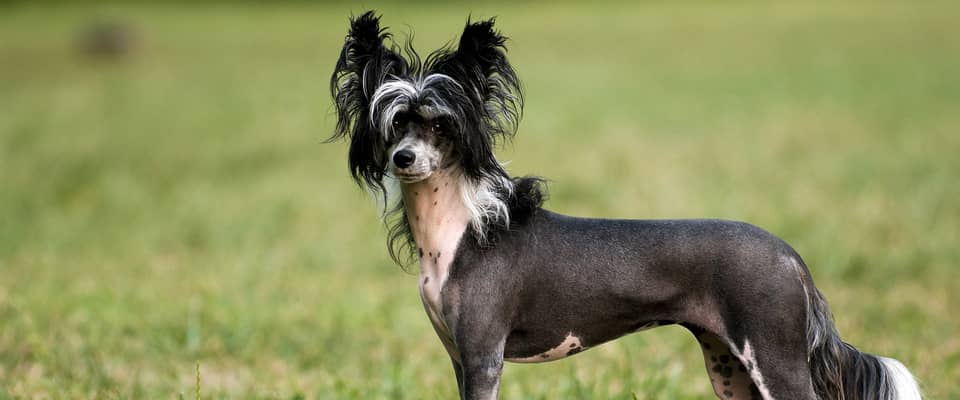
- Hairless or low-hair dogs: These dogs often have sensitive skin and may need a bath every one to two weeks to control oil buildup. Mild, fragrance-free shampoos are usually the safest choice.
-
Activity Level
A dog’s lifestyle plays a big role in how often they need cleaning. San Diego dogs tend to be active, which means they may get dirtier faster.
- Beach dogs: Saltwater, sand, and seaweed stick to the coat and skin. Dogs who visit Mission Beach, Ocean Beach, or Fiesta Island may need rinsing after each visit and full baths every one to two weeks.
- Hiking or trail dogs: Dust, pollen, and burrs from places like Torrey Pines or Mission Trails can build up. These dogs often need a bath every two to three weeks, depending on how often they go out.
- Mostly indoor dogs: If your dog prefers naps over adventures, they can often go four to eight weeks between baths depending on coat type.
-
Skin and Health Conditions
Your dog’s skin health can change your entire bathing routine. At Fon Jon Pet Care, our groomers often adjust bath schedules for dogs with allergies, dryness, or sensitive areas.
Common conditions include:
- Seasonal allergies
- Flaky or dry skin
- Hot spots
- Sensitive patches from licking
- Yeast or bacterial concerns
-
Climate
San Diego’s coastal climate plays a part in how often your dog gets dirty. Warm weather encourages more outdoor time, and the dry parts of the year create more dust that settles into fur.
Key climate impacts:
- Coastal humidity can lead to mild odor between baths
- Dry summer months cause more dust on outdoor trails
- Salt air near the beach can cling to fur
- Sand collects in paws and underbellies
Because of this, many active San Diego dogs need slightly more frequent baths than dogs in cooler climates. Rinsing after beach days or long hikes helps maintain a rhythm that keeps their coat healthy without overbathing.

Signs It’s Time for a Bath
Some dogs make it very clear when they need a bath. Others need a little closer look. A few simple signs can help you know when it is the right moment to freshen them up.
Here are the most common ones:
- Noticeable odor. A natural dog smell is normal, but if the scent is strong or musky, it usually means oils and dirt have built up.
- Visible dirt on the coat. Dust, sand, or mud on your dog’s back, belly, and legs is a clear sign they need cleaning.
- Oily or sticky fur. If the coat feels greasy or tacky, it is time for a bath to reset the skin.
- Dull or rough-feeling coat. A healthy coat looks shiny and feels soft. If it loses that look, a bath can help restore it.
- Scratching more than usual. Dirt, salt, or pollen stuck in the coat can make your dog itchy.
- Flakes in the fur. Dandruff-like flakes often mean the skin needs a gentle wash and moisture.
Bathing Frequency by Lifestyle
Dogs who spend long hours outdoors usually need more baths than dogs who stay inside. As a quick rule, active San Diego dogs who visit beaches or trails often need bathing every one to three weeks, while indoor dogs can go longer.
The right schedule depends on where they spend their time and how dirty they get.
Here is a simple breakdown to help you plan:
| Lifestyle Type | Bath Frequency | Notes |
|---|---|---|
| Beach-loving dogs | Every 1 to 2 weeks | Rinse after each beach visit to remove salt and sand |
| Hiking or trail dogs | Every 2 to 3 weeks | Every 2 to 3 weeks |
| Dog park regulars | Every 3 to 4 weeks | Social play adds dirt and oils over time |
| Mostly indoor dogs | Every 4 to 8 weeks | Depends on coat type and skin health |
| Allergy-prone dogs | As guided by vet | May need medicated baths more often |
| Senior dogs who move less | Every 4 to 6 weeks | Helps with odor and coat comfort |
Common Mistakes to Avoid
Bathing seems simple, but a few small missteps can cause dryness or irritation. Being aware of these helps keep your dog healthy and happy.
Using Human Shampoo
Human shampoo is made for a different skin pH and can strip your dog’s natural oils. Even gentle formulas can dry their skin. Dog-friendly shampoos are made to protect the coat and skin barrier. If your dog has allergies or sensitive skin, your groomer may recommend a mild or fragrance-free option.
Bathing Too Often
Bathing your dog more than needed can cause itching and flaking. Natural oils protect the skin, so removing them too often leads to dryness. Instead of frequent baths, use quick rinses after beach days or wipe-downs after walks to keep the coat fresh between full washes.
Skipping Brushing Before a Bath
Wet mats turn into tight knots that pull at the skin. Brushing before bathing removes loose fur and prevents tangles. This step is especially important for doodles, goldens, and long-haired breeds. Starting with a clean, brushed-out coat helps the shampoo reach the skin evenly.
Not Rinsing Thoroughly
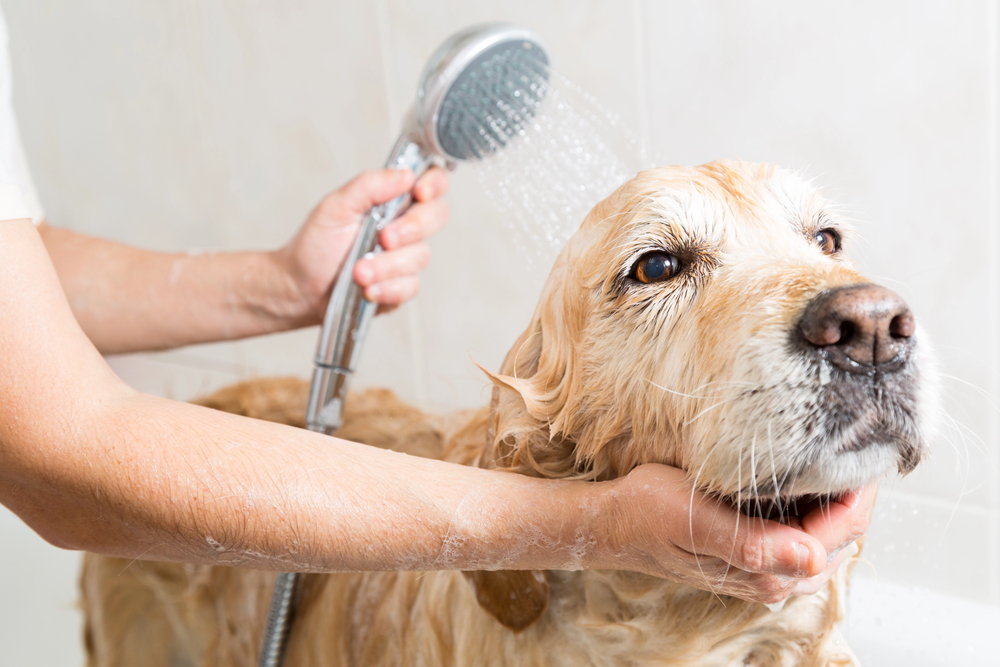
Leftover shampoo or conditioner can leave the coat sticky and cause itchiness. You should rinse longer than you think is needed. Run your fingers through the coat to feel for any slippery or soapy spots. A complete rinse keeps the skin healthy and makes drying easier.
Using Water That Is Too Hot
Hot water dries out the skin and can make some dogs uncomfortable. Lukewarm water is gentle and helps keep the coat smooth without stressing the skin.
Grooming vs Bathing Frequency
Grooming needs to happen more often than bathing because it keeps your dog comfortable between washes. Brushing, nail care, and simple touch-ups support coat health even when your dog does not need a full bath.
Bathing schedules vary by coat type and lifestyle, but grooming is the steady routine that prevents mats, removes loose fur, and keeps the skin healthy.
Long-coated breeds often need brushing several times a week, and double-coated dogs benefit from regular deshedding. Professional grooming also covers nail trims, ear cleaning, and small hygiene trims that many pet parents forget at home.
When you pair routine grooming with the right bathing schedule, your dog stays clean, soft, and comfortable all year.
When to Leave It to the Pros
Some dogs are easy to bathe at home, while others do better with professional grooming. A trained groomer can handle sensitive skin, tricky coat textures, and anxious pups with a calm, steady approach.
At Fon Jon Pet Care, our groomers work with all coat types, so they know how to keep the process smooth and stress-free.
Professional grooming is especially helpful when:
- Your dog has a thick or double coat that needs proper deshedding
- Your dog gets matted easily, especially doodles and long-haired breeds
- Your pup has skin sensitivities that need the right products
- Your dog dislikes baths or gets anxious in the tub
- You notice odor that returns quickly even after home baths
- You want a tidy trim, nail care, and ear cleaning done safely
Final Words
A healthy bathing routine depends on your dog’s coat, lifestyle, and skin needs. Beach-loving San Diego dogs usually need more frequent cleaning, while indoor pups can go longer between baths. Watching for signs like odor, dirt buildup, or itching helps you stay on track.
Good grooming habits, such as brushing and regular check-ins with a groomer, make every bath easier and keep your dog’s coat comfortable all year.
If you ever feel unsure about your dog’s skin or coat, a professional groomer can guide you toward the right products and schedule.
At Fon Jon Pet Care, our team is always here to help your dog look and feel their best. If you want a clean, happy pup without the mess at home, you can book a grooming appointment anytime.
FAQs
Can I bathe my dog once a week?
It’s fine for some dogs, especially those with oily coats or frequent outdoor activity. However, most breeds don’t need weekly baths. Too many baths can strip the coat of natural oils, so once every few weeks is usually better.
What happens if I bathe my dog too often?
Over-bathing can dry out the skin, cause itching, and make the coat dull. It may also lead to irritation or flaking. Always balance cleanliness with your dog’s natural oil production.
How do I bathe my dog without shampoo?
You can rinse your dog with warm water or use a pet-safe grooming wipe between baths. This helps remove dirt and odor without affecting skin oils. Baking soda or a dog-safe dry shampoo can also help freshen up the coat.
Should I brush before or after a bath?
Brush your dog before the bath to remove tangles and loose hair, then again after drying to keep the coat smooth. Brushing before bathing also helps shampoo reach the skin evenly.