Tips on How to Help with Separation Anxiety in Puppies
Puppy separation anxiety is a typical problem that many pet owners encounter. When a puppy is afraid of being alone, it may exhibit this behavioral problem. If you care about your pet’s health, you must learn about this issue and find a solution. Here at Fon Jon Pet Care, we know how important it is to have a healthy and happy pet. That’s why we’ve compiled this article to help you overcome your puppy’s separation anxiety.

Boarding Clients!*Discount does not apply during holiday/peak rate periods.

Understanding Puppy Separation Anxiety
When a puppy experiences distress because of their guardian’s or owner’s absence, it develops a complex emotional state known as puppy separation anxiety. When a puppy’s natural need for companionship and security goes unfulfilled, it displays a variety of anxious behaviors, which is the root cause of this condition. Separation anxiety is a severe phobia of being alone, and it’s important to understand that it’s more than just a puppy missing its owner.
The puppy’s developmental stage is fundamental to this issue. Puppies go through a crucial stage of development when they learn and adapt, particularly in the first few months. To ensure their survival, they have an innate tendency to remain close to their caregivers. Even if it’s only for a short time, being apart can make them feel abandoned and cause them anxiety.
While destructive or disruptive behaviors are common in puppies with separation anxiety, the exact symptoms can vary. They may show their distress through vocalizations such as excessive barking, whining, or howling. Symptoms manifest physically as pacing, shallow breathing, or profuse salivation. In extreme instances, puppies may try to get away from their owners by engaging in destructive behaviors such as digging or chewing on furniture, and walls, or even opening doors and windows.
Puppy accidents—even in otherwise house-trained dogs—may occur when left alone and are a common symptom of separation anxiety. The stress they are going through is the real reason behind this behavior, not disobedience or spite.
Anxiety about being apart from a loved one is a real psychological reaction, not an indication of bad training or disobedience. The environment, a puppy’s history, and its temperament are all potential contributors to this condition. For example, puppies who have endured traumatic separations or who have witnessed sudden changes in their living conditions may be more likely to develop separation anxiety.
A puppy’s separation anxiety can be better managed if its causes and symptoms are understood. You can help your puppy gain the self-assurance and independence it needs to feel safe when you’re not around by keeping an eye out for warning signs and acting accordingly with training and care. The development and health of your puppy depend on your ability to alleviate their separation anxiety symptoms while simultaneously providing them with a safe and secure environment.
Preventing Separation Anxiety in Puppies
The best way to help your new puppy overcome separation anxiety is to start taking preventative measures as soon as you bring him home. To teach your puppy to be alone without being abandoned or distressed, you must provide a nurturing environment that encourages independence and self-assurance. To forestall the development of separation anxiety, consider the following measures:
Early Introduction to Alone Time
The idea of being alone should be introduced to your puppy in small, manageable chunks. The first step is to leave them alone in a puppy-proofed room for brief intervals while you tend to other matters around the house. Baby gates allow you to create a secure area where they can remain visible to you. To help them adjust to your absence, it’s best to gradually lengthen the time and distance you spend apart from them.
Create Positive Associations
Help your puppy adjust to being alone by making it fun. You can accomplish this by giving them exclusive treats or toys that they can only enjoy when they are alone. Great options include puzzle toys that include treats or long-lasting chews. In addition to keeping them occupied, these items can help them associate being alone with positive emotions.
Develop a Consistent Routine
Because it helps them feel safe, puppies do best with consistent routines. Make sure to include feeding, walks, playtime, and quiet time in your pet’s daily routine. Because the puppy can anticipate what will happen throughout the day, even when they are alone, this predictability helps alleviate anxiety.
Avoid Over-Attachment
Although it’s normal to want to be your new puppy’s constant companion, it’s best to teach it to be independent at first. Do not bring them with you at all times or make them follow you around. Let them play and explore on their own to help them become used to being around people all the time.
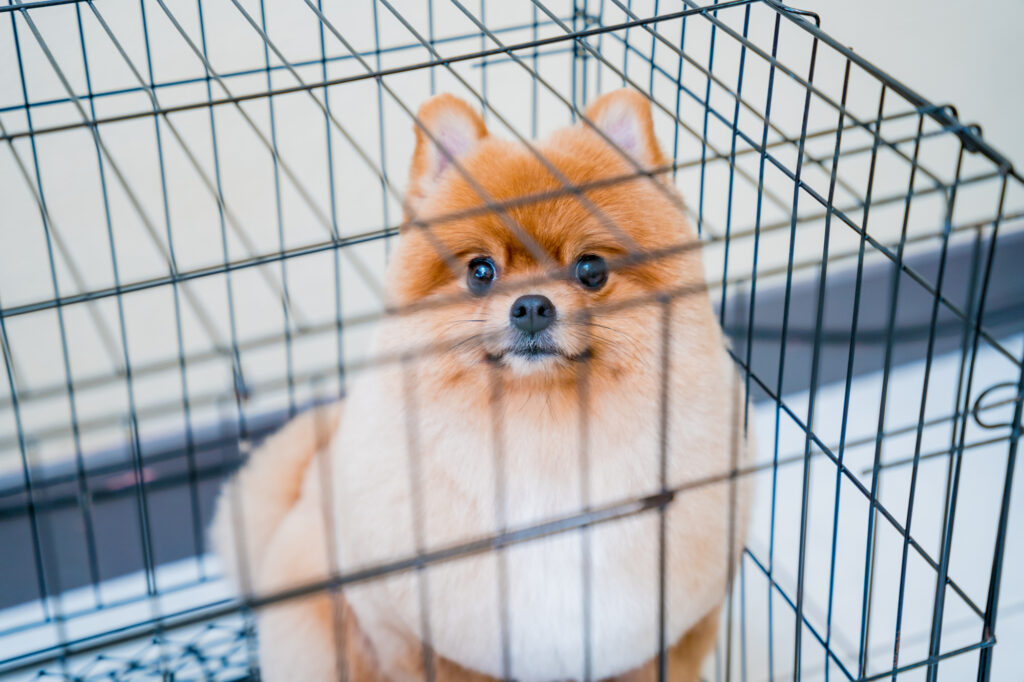
Crate Training
Your puppy may find comfort and security in a crate, which can serve as a makeshift sanctuary. Create a welcoming and positive environment by introducing the crate little by little. Never resort to slapping your pet in a crate. Your puppy will eventually come to associate the crate with a haven where it can unwind and recharge.
Desensitization to Pre-Departure Cues
When you do things like pick up the keys or put on your shoes, puppies may get nervous because they think you’re leaving. Doing them at random times throughout the day without leaving can help desensitize your puppy to these cues. As a result, people will no longer associate these behaviors with your absence.
Socialization and Confidence Building
In a calm and controlled way, introduce your puppy to different people, animals, and situations. As they interact with others, their self-esteem grows and their anxiety diminishes, even in solitary moments.
Responding to Early Signs
Take prompt action if you become aware of any early warning signals of anxiety. This could necessitate consulting a behaviorist or personal trainer, adding physical activity to your daily regimen, or changing your current approach.
Professional Guidance
Talk to a dog trainer or behaviorist if you need help figuring out what causes your dog to suffer from separation anxiety or how to treat it. They are able to assess your puppy’s unique needs and provide individualized recommendations and training plans.
Your puppy’s risk of developing separation anxiety can be greatly reduced by following these preventative measures. Keep in mind that raising a puppy in a loving and supportive environment will help it develop the self-assurance and independence it needs to thrive as an adult dog.
Understanding Breed-Specific Tendencies
Because of their genes, some dog breeds are more likely to suffer from separation anxiety than others. Labrador Retrievers, German Shepherds, and Australian Shepherds are just a few of the many dog breeds that are famously very attached to their human families. Training your puppy will go more smoothly if you are aware of the characteristics unique to its breed.
Professional Help
Do not hesitate to consult an expert if you are unable to alleviate your puppy’s separation anxiety. Specialized advice and assistance can be given by a Certified Separation Anxiety Trainer (CSAT).
With time, understanding, and regular training, separation anxiety in puppies can be overcome. Here at Fon Jon Pet Care, we want to make sure that you and your puppy have a wonderful, worry-free life. Keep in mind that each puppy is an individual, so results may vary from one to the next. Your new best friend will eventually learn to relax even when you’re not there if you’re patient and pay close attention to his or her needs.
Contact the friendly staff at Fon Jon Pet Care at any time for further details or individualized recommendations; we’re here to help you and your pet through any situation.
Frequently Asked Questions About Puppy Separation Anxiety
What is puppy separation anxiety?
When puppies suffer from separation anxiety, they become extremely distressed and worried whenever they are apart from their main caregivers, such as their owners. Excessive barking, destructive chewing, and house soiling are some of the behaviors that can be observed.
Can separation anxiety in puppies be cured?
Consistent training, behavior modification, and occasionally professional assistance can often manage and reduce separation anxiety, which can be a challenging condition. Puppies often develop the ability to be quiet and content when given the opportunity to do so.
How do I know if my puppy has separation anxiety?
When left alone puppies with separation anxiety may exhibit destructive behaviors like chewing or digging or make excessive noises like barking or whining. These actions usually disappear whenever the owner is present.
What causes separation anxiety in puppies?
A lack of socialization, abrupt changes in routine, traumatic events, or even genes can all contribute to separation anxiety. Anxiety is more common in certain breeds than in others.
What are the first steps in treating separation anxiety?
Building a routine, making sure your puppy is comfortable, and acclimating them to being alone are the first steps. Additionally, it is crucial to avoid greetings and farewells that are overly emotional and to provide positive reinforcement.
Is crate training effective for separation anxiety?
Crate training works best when the puppy feels secure and at ease in its crate. Rather than using it as a form of punishment, think of it as a safe haven that can alleviate stress.
How long does it take to resolve separation anxiety?
Treatment duration for separation anxiety is conditional on the severity of the problem and the regularity of the interventions and training. It may necessitate persistent work for a few weeks or months.
Can exercise help with separation anxiety?
Because it burns off excess energy and stimulates the mind, regular exercise can help reduce separation anxiety symptoms.
Should I get another pet to keep my puppy company?
Adding a new pet to the family isn’t a quick fix and needs serious thought. It doubles your pet’s responsibilities and may help some puppies but may still make others anxious.
When should I seek professional help for my puppy's separation anxiety?
Consult a veterinary behaviorist or professional dog trainer if your at-home attempts to alleviate separation anxiety are unsuccessful or if the anxiety is severe (e.g., leading to self-injury or extreme panic attacks).
Keep in mind that every puppy is different, so the methods that work for one might not for another. Assisting your puppy in overcoming separation anxiety requires understanding, consistency, and patience.