

Safety Tips for Dogs at the Beach In San Diego
A beach day with your dog sounds simple enough. Grab the leash, toss a towel in the car, maybe bring a ball, and head toward the coast. In San Diego, though, the best beach days happen when you know the rules before your dog’s paws hit the sand.
Some beaches welcome off leash play. Others have time limits, leash rules, wildlife areas, rough surf, or water conditions worth checking first. Add heat, saltwater, and a dog who thinks every piece of seaweed is a snack, and a little planning goes a long way.
Beach days in San Diego are safer when you check local rules first, bring your own water, keep an eye on heat and waves, and stay involved instead of zoning out. A quick rinse and some basic care after the beach can make a huge difference in how your dog feels later.
 30% Off Dog or Cat Boarding for New Clients!

1. Check Dog Beach Rules Before You Go
This part feels boring, but it matters more than people think. Some beaches are relaxed. Others are strict. Ocean Beach Dog Beach and Fiesta Island give dogs room to run off leash. Step outside those zones and things change quickly.
From April 1 through October 31, many San Diego beaches do not allow dogs during the middle of the day, 9 a.m. to 6 p.m. Outside those hours, leashes come back into play unless you are in a designated area.
Then you go up toward Del Mar and it changes again. Summer mornings? Off leash for a short window. After that, leash goes back on.
It is one of those “every beach, different rules” situations. So yeah, quick sign check before unloading everything is worth it. Saves you from that walk back to the car where your dog is confused and you are annoyed.
2. Make Sure Your Dog Is Ready for the Beach
Here is a question worth asking yourself: does your dog listen when something exciting happens?
Not in your living room. Not in a quiet park. At the beach. Because the beach is chaos. Birds dart across the sand, kids drop snacks, another dog sprints past, waves crash, someone throws a ball right near you. It is a lot.
At a minimum, your dog should respond to:
- Come
- Leave it
- Drop it
- Stay
If “come” only works when nothing else is going on, that is not enough for an off leash beach.
We have seen dogs do great on leash, then hit the sand and forget everything they ever learned. If that sounds familiar, start slower. Early mornings, quieter areas, shorter visits. No rush.
3. Bring Fresh Water and a Bowl
Dogs and ocean water do not mix well. You might think, “It is just a little.” Then your dog keeps licking waves, starts swallowing more, and now you are dealing with an upset stomach later.
Bring your own water. More than you think you need.
And here is the trick, offer it before your dog goes looking for it. Once they decide the ocean is their water source, it is harder to stop.
A simple setup works fine:
- Water bottle
- Collapsible bowl
- A couple breaks during play
4. Watch for Hot Sand and Heat Stress
This one sneaks up on people. The air feels nice, maybe even a little cool with the breeze. Meanwhile, the sand is heating up fast.
Test it. Bare foot, back of your hand, whatever works. If you pull away, your dog should not be walking on it. Heat issues can show up quickly. Heavy panting, slowing down, acting a bit off. Some dogs push through it, which makes it worse.
Short visits help. Shade helps more than people expect. Even just a towel under an umbrella can give your dog a place to reset.
5. Be Careful Around Waves and Currents
Some dogs love water. Some act like they invented swimming. Still, the ocean is not predictable.
Rip currents are real here, and they do not care if your dog is confident. At beaches like Ocean Beach, waves can build fast, and a dog that goes a little too far out may struggle coming back.
Keep things closer to shore. No need to launch the ball into the next zip code.
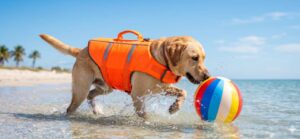
If your dog is new to ocean swimming, or small, or just not built for it, a life jacket is not a bad idea. Think of it as backup, not overkill.
6. Prevent Your Dog From Eating Sand, Seaweed, or Trash
Dogs have a talent for finding the one gross thing on the beach. Seaweed, food scraps, shells, dead fish, bait, wrappers, and sandy tennis balls can all cause problems.
Sand is a sneaky one. Dogs may swallow it while digging, chewing toys, or catching a ball covered in grit. Too much sand can irritate the stomach and may need vet care.
Use “leave it” before your dog gets too interested. Use “drop it” if they already picked something up.
Before heading home, check your dog for:
- Cuts
- Shell pieces
- Fishing line
- Hooks
- Burrs
- Sand stuck in the coat
- Red or irritated skin
A quick nose to tail check is worth it. Beach debris hides in strange places.
7. Practice Good Dog Beach Etiquette
This one is simple, but people forget. Not every dog wants to play. Not every person wants to interact.
If your dog is bouncing between groups, jumping on strangers, or getting too intense, call them back. Give space.
Also, Fiesta Island has protected nesting areas for California Least Terns. Dogs are not allowed inside those fenced spots, and some nearby areas close part of the year. Easy to miss if you are not paying attention.
And yeah, pick up after your dog. No one enjoys that surprise in the sand.
8. Pack a Dog Beach Safety Kit
You do not need a trunk full of gear. A small kit can handle most beach day needs.
Bring:
- Fresh water
- Collapsible bowl
- Leash or long line
- Waste bags
- Towels
- Shade
- Treats
- Dog safe sunscreen
- Brush or comb
- Life jacket for swimming
- Basic first aid items
Use sunscreen made for dogs only. Dogs with light coats, thin coats, pink skin, or exposed noses and ears may need extra sun protection.
Treats help too. They are not just snacks. They can reward recall, calm behavior, and good choices when your dog ignores something weird in the sand.
9. Rinse and Groom Your Dog After the Beach
Here is something people notice later, not right away.
Your dog looks fine after the beach. Then a few hours go by. Now they are itchy, or their coat feels rough, or you find sand in places you did not expect.
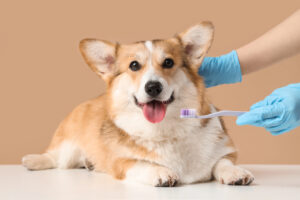
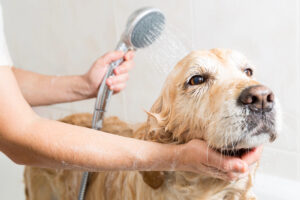
Salt and sand stick around. Rinse your dog when you get home. Not just a quick splash. Get between the toes, under the belly, around the ears.
We have seen coats hold onto sand deep inside, especially thicker or curly ones. That is where grooming helps. A proper clean, brush out, and reset.
When to Skip the Beach
Some days just do not line up. If the sand is hot, the surf looks rough, or the beach is packed, it may not be worth it. Same goes for water warnings.
Your dog matters here too. If they are off that day, low energy, stressed around other dogs, still learning recall, it is okay to pass.
A short walk, some play at home, maybe daycare instead. They will be fine. Probably happier, honestly.
How Training Can Make Beach Trips Safer
Training is what helps your dog listen when the beach gets loud. Birds dart across the sand, kids run by with snacks, bikes roll past, and another dog may decide your dog’s toy is now community property.
A few skills make the biggest difference:
- Recall
- Leash manners
- Leave it
- Drop it
- Calm greetings
- Waiting near gates and parking areas
- Settling around distractions
Practice those skills somewhere easier before testing them at Ocean Beach Dog Beach or Fiesta Island. A quiet park gives your dog room to learn. The beach, on the other hand, is the final exam with seagulls.
How Fon Jon Pet Care Can Help
Beach days are fun. The cleanup after? Not always.
Fon Jon Pet Care helps with that side of things. Grooming after a beach trip can clear out salt, sand, loose hair, and keep the coat from getting uncomfortable.
Training support helps too. Better recall, better behavior around distractions, less chaos when your dog sees another dog or a flying seagull.
If beach days feel a bit out of control right now, that is fixable.
How Fon Jon Pet Care Can Help
Beach days with dogs should feel easy, not like you are managing a tiny lifeguard emergency. Check the rules, pack fresh water, watch the sand and surf, stop snack hunting in the seaweed, and rinse your dog well once you get home.
A little care before and after the beach can save your dog from sore paws, tangled fur, stomach trouble, and stressful run-ins.
For grooming after sandy adventures or training support before the next beach trip, contact Fon Jon Pet Care and help your dog enjoy San Diego’s coast with a little less chaos.